Savings on eligible energy
Test the actual utility energy credit against delivered PPA costs, genuinely additional settlement fees and administration. Savings are possible, not guaranteed.
AKG proposes to help homeowners’ associations (HOAs), bodies corporate, estate developers and managing agents assess renewable electricity procurement from off-site generators through approved utility-network wheeling and settlement — from feasibility to commercial structuring and monthly reconciliation.
Start with utility eligibility, not a promised saving. AKG would coordinate with appropriately licensed or registered counterparties; this is not a claim that AKG is an electricity trader or utility, or that live estate contracts exist.
Wheeling uses the existing electricity network and an approved commercial settlement arrangement. It does not create a dedicated physical supply line or replace the estate’s utility obligations.
Test the actual utility energy credit against delivered PPA costs, genuinely additional settlement fees and administration. Savings are possible, not guaranteed.
An agreed power purchase agreement (PPA) can support planning, subject to escalation, volume commitments and changing utility charges.
The renewable generator is off-site. The estate still needs eligible supply accounts, approved metering and the utility network.
Develop a transparent, approved resident allocation method and sustainability records with clear environmental-attribute ownership.
Begin with qualifying bulk-metered medium-voltage (MV) estate or common-area supplies. Individually utility-billed low-voltage (LV) homes are not automatically eligible; aggregating their demand does not create eligibility.
Identify the distributor, bulk versus individual accounts, voltage, tariff and time-of-use requirements, interval metering and data quality. Confirm that the relevant municipal or Eskom framework is available and that the proposed contract is approved.
Frameworks differ by municipality. Cape Town’s bilateral framework has MV/HV 11–132 kV and time-of-use criteria with applicable supplemental agreements and use-of-system fees; these are not national residential rules. Virtual wheeling is a conditional product and claims structure, not blanket availability for residential homes. Validate the specific supply with the utility before pricing.
Confirm the HOA or body corporate mandate, owner/resident approvals and procurement process. Agree meter-data access and privacy safeguards, and a lawful, approved resident billing allocation. Wheeling does not automatically authorise electricity resale.
The grid remains necessary and normal network outages and loadshedding still apply. Local solar, battery storage or backup generation for resilience is a separate scope. Daytime solar output must be tested against an estate’s evening load; only qualifying matched or settled kWh receives credit under applicable rules. Contracts must address surplus, shortfall, losses and curtailed supply.
Hypothetical: 480 homes averaging 600 kWh per month, plus 12,000 kWh for common areas, total 300,000 kWh. Assume utility approval and an eligible settled share of 35% — 105,000 kWh per month.
Every rate and amount is an invented scenario, excluding VAT — not a utility tariff, an AKG quotation or a guarantee. Credit eligibility confirmation is a prerequisite. This comparison does not certify an estate’s eligibility.
Assumed avoided utility energy component / actual qualifying settlement credit. The same illustrative energy component is used for the baseline bill; actual tariff and time-of-use credits must be verified.
Assumed generator energy obligation on the settled volume. The actual PPA must address supply, losses, shortfalls and any minimum-take obligations.
Only genuinely incremental wheeling / settlement costs, not fees already included in unchanged utility charges. Monthly administration and setup are separate.
7.3% of the whole baseline bill · R633,000 per year before setup.
105,000 kWh × (R2.10 credit − R1.35 PPA − R0.20 incremental costs) − R5,000 administration = R52,750.
The R0.55/kWh spread applies only to qualifying settled energy. Unchanged R90,000 fixed, network and demand charges are included once in both the baseline and modelled after-cost.
Do not interpret estate-wide savings as a promised amount per home. Resident allocation depends on the approved legal and billing arrangement.
At zero settled kWh and the same R5,000 monthly administration, the model loses R5,000 monthly and R180,000 in year one including setup. There is no positive payback.
If the credit equals PPA plus incremental cost, the energy spread is zero and administration creates a loss. If credit is lower, the loss grows. At exactly zero net savings there is break-even, no surplus and no positive setup payback.
Existing utility bills remain payable under the arrangement, including fixed, network and demand charges. Virtual wheeling may require full bill payment followed by a monthly retrospective energy refund. Reconcile PPA obligations against actual credits; renewable kWh does not cancel the whole retail tariff.
A one-off diligence/setup scope and an agreed monthly procurement/reporting fee would be set by tailored agreement. Generator PPA costs and utility charges remain separate, transparent cost lines. The example budgets are not actual AKG prices.
Proposed AI support can flag demand peaks and reconciliation exceptions and prepare human-reviewed reports. It is not a live utility connection or autonomous electricity control.
Review 12 months of utility bills and interval consumption data, including common areas, daytime demand and evening peaks.
Check the distributor’s written requirements, account and tariff eligibility, metering, board mandate and owner/resident approvals before pricing.
Assess appropriately licensed or registered counterparties, delivered energy prices, creditworthiness, escalation, tenure, minimum-take, volume and exit terms.
Prepare utility applications, supplemental and use-of-system agreements, approved data access and lawful resident billing arrangements.
Once authorised and contracted, reconcile supplied energy, qualifying credits, PPA obligations, utility bills and approved allocations every month.
Procurement diligence should cover PPA tenure, escalation, volume and minimum-take obligations, exit rights and creditworthy contracting parties. Complete relevant supplier registrations or licences, use-of-system and supplemental agreements, meter requirements and utility approvals as applicable.
Agree who owns renewable electricity certificates and other environmental attributes, and avoid double counting. Electricity certificates and emissions records are not carbon-credit issuance; carbon credits are not earned automatically through wheeling. Any credit opportunity needs the applicable standard, additionality, independent verification, registration and agreed ownership.
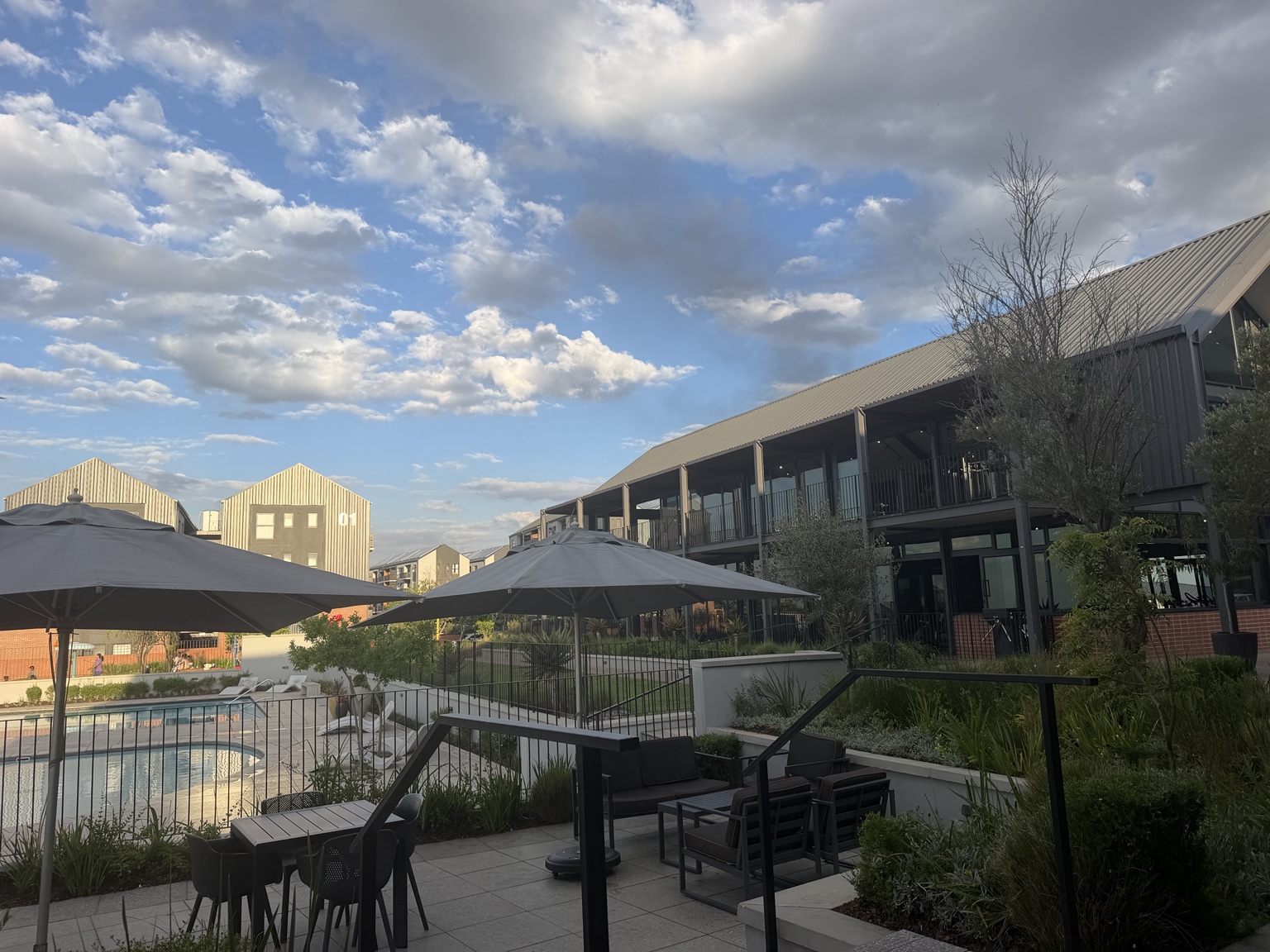
The estate photograph above shows a typical residential setting for illustration. The worked estate case remains a hypothetical scenario, not a named customer, completed project or operational supply contract.
Describe your estate, distributor, bulk or individual account structure and any available consumption history. Initial screening can establish what needs confirmation before commercial offers are compared.
Request an estate wheeling assessmentThe estate enquiry option carries the assessment context separately and never overwrites your message. Email sending remains unavailable until AKG’s mailboxes and sender are ready; you can prepare and download a local draft.